
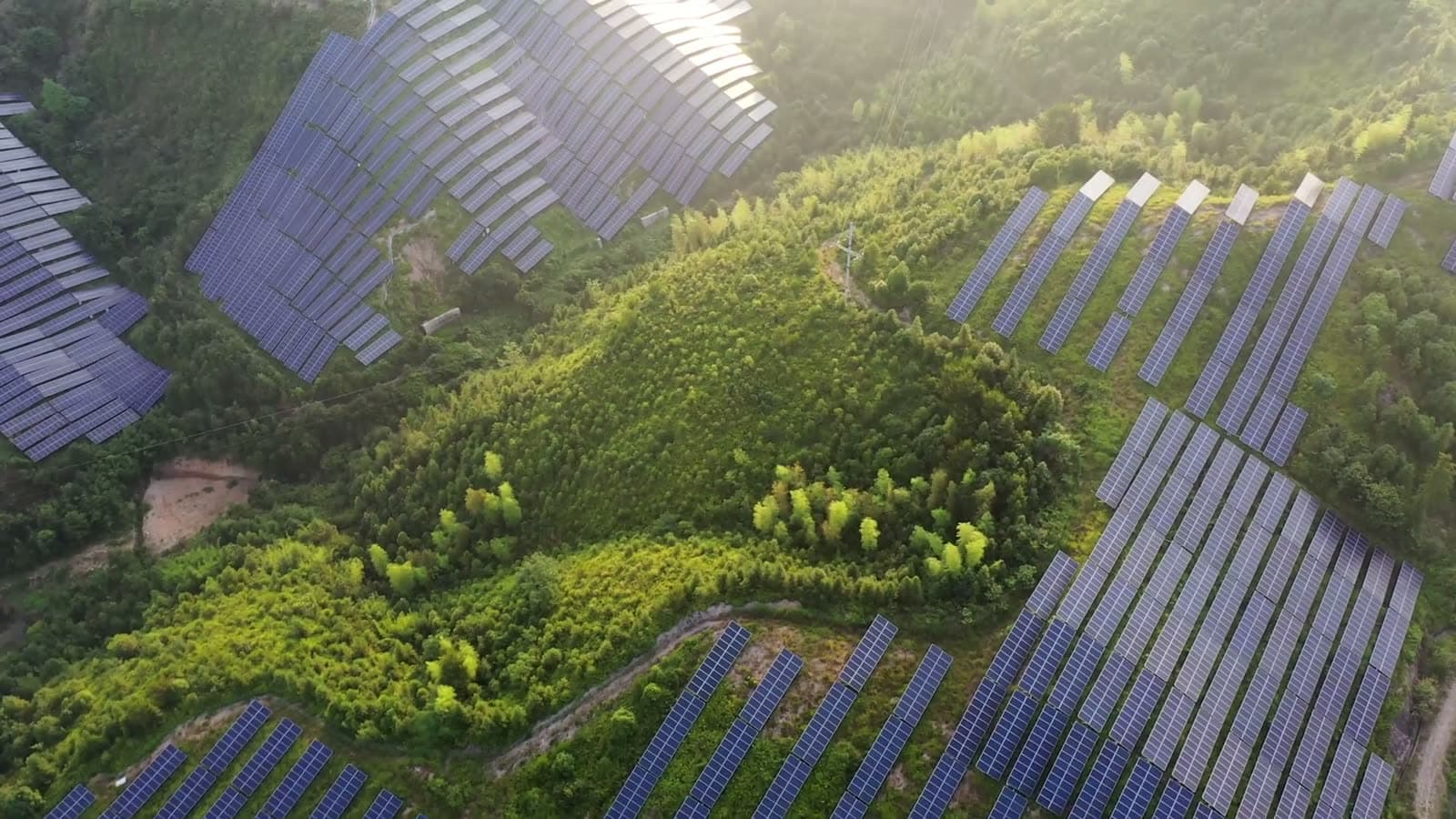
Solar U-Pile — Open Channel Post
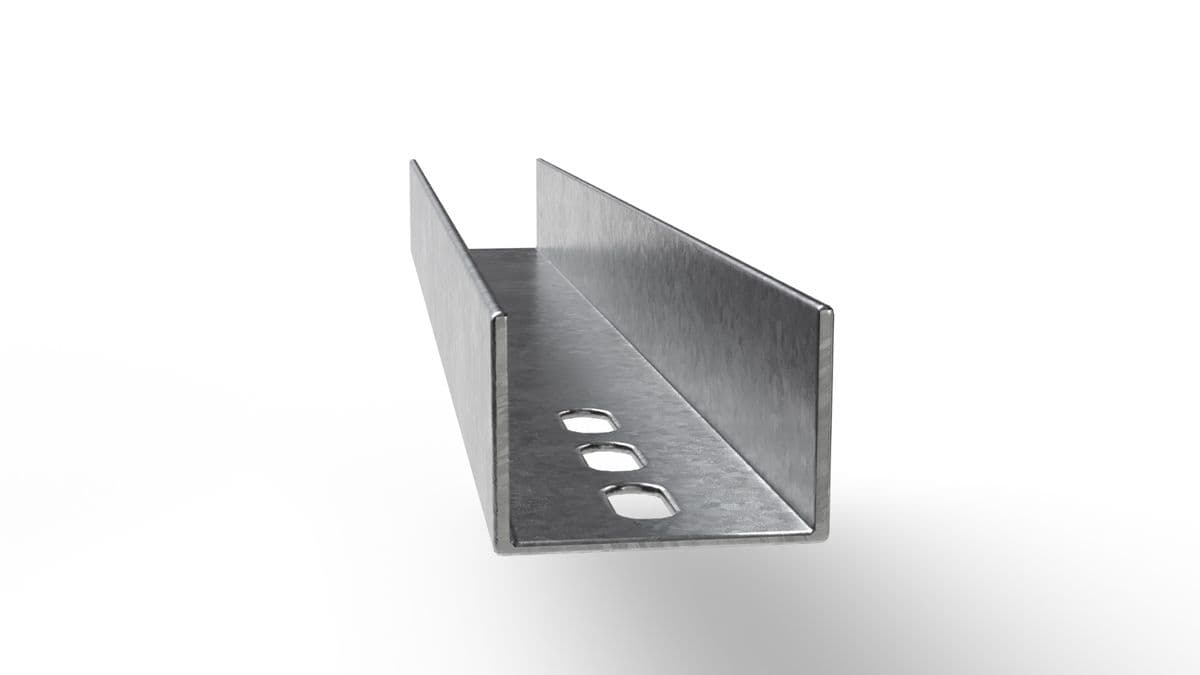
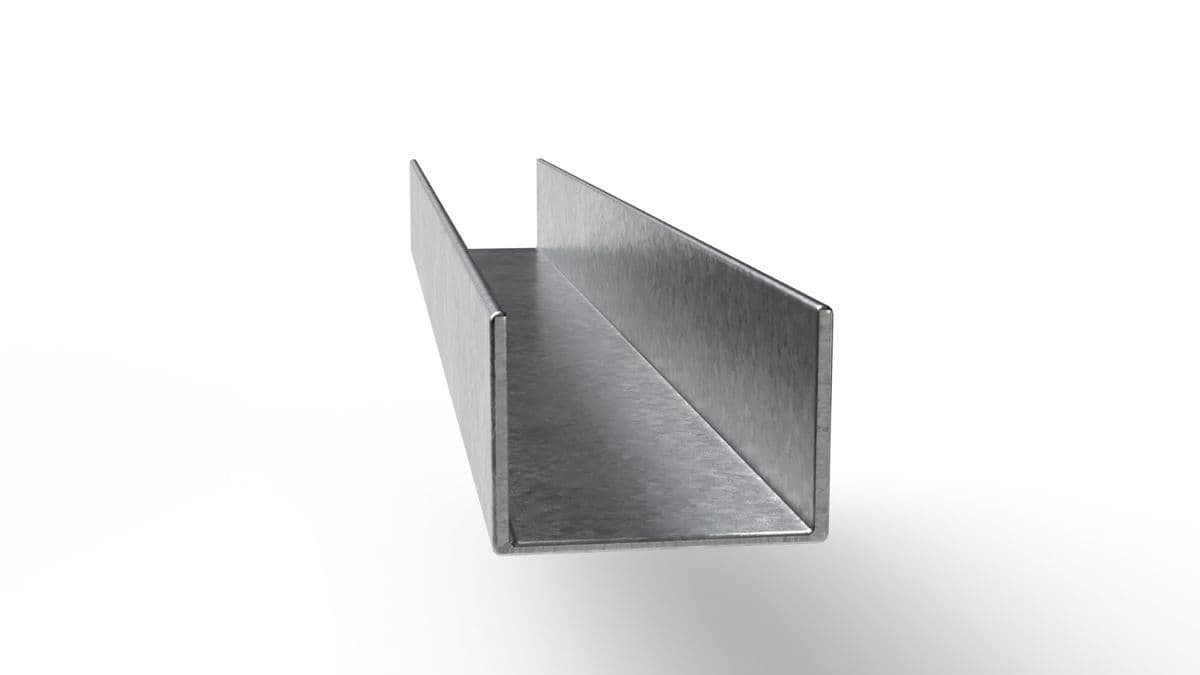
An unlipped, open U-channel pile: the economical answer for lightly loaded tables, compact ground frames and secondary members where a full C-section isn't needed.
Specifications
- Section
- Open U-channel, cold-formed
- Depth
- 80 – 200 mm
- Thickness
- 2.0 – 6.0 mm
- Material
- S350GD · S235JR (S250–S450GD)
- Coating
- Zn-Al-Mg ZM120–ZM430 · Galvanized Z275–Z600
- Holes
- Plain or punched in-line
- Length
- Cut to length
Where a U-pile makes sense
A U-pile serves as the primary post on low wind and snow sites, on small and mid-size ground-mount systems and on compact tables. On larger systems it is also an economical section for braces, ties and secondary members.
Its clean open face takes brackets and rails with fast bolted connections. Driving, alignment and assembly follow the same steps as a C-pile — the difference is the load the section can carry.
C or U?
A U-section has free flange tips: without lips, its thin flanges buckle locally earlier than a C-section's. At the same developed width a C-section therefore carries more load. The U, in turn, is a simpler geometry that lowers cost per kilo wherever the load allows.
The rule of thumb: if the structural check passes with a U, use a U; if flange buckling or bending capacity is marginal, go to a C or a sigma pile. Share your site loads and we will pick the section together.
Sizes, steel and coating
We roll U-piles from 80 to 200 mm deep and 2 to 6 mm thick. S350GD is the standard grade, with S250GD–S450GD chosen to suit the load. Coating is Zn-Al-Mg (ZM120–ZM430) or galvanized (Z275–Z600) — formed from pre-coated coil, so no post-galvanizing bath is needed. See our coating guide for choosing the class.
Hole patterns and connections
Connection holes and slots are punched in the same pass as the forming, so hole positions are identical across the batch. Round holes, oval adjustment slots or patterns to your drawing are all possible — or plain, unpunched lengths.
Example U-pile sections — weights and section properties
| Section h×b×c×t (mm) | A (cm²) | Weight (kg/m) | Ix (cm⁴) | Wx (cm³) |
|---|---|---|---|---|
| U 80×40×2 | 3.07 | 2.41 | 30.8 | 7.71 |
| U 80×40×2.5 | 3.79 | 2.98 | 37.5 | 9.39 |
| U 80×40×3 | 4.50 | 3.54 | 43.9 | 10.97 |
| U 80×40×4 | 5.87 | 4.61 | 55.4 | 13.85 |
| U 100×50×2 | 3.87 | 3.04 | 61.5 | 12.30 |
| U 100×50×2.5 | 4.79 | 3.76 | 75.3 | 15.05 |
| U 100×50×3 | 5.70 | 4.48 | 88.5 | 17.69 |
| U 100×50×4 | 7.47 | 5.87 | 113.0 | 22.60 |
| U 120×50×2 | 4.27 | 3.35 | 93.8 | 15.63 |
| U 120×50×2.5 | 5.29 | 4.16 | 115.1 | 19.18 |
| U 120×50×3 | 6.30 | 4.95 | 135.6 | 22.59 |
| U 120×50×4 | 8.27 | 6.49 | 174.0 | 29.00 |
| U 150×60×2 | 5.27 | 4.14 | 180.4 | 24.05 |
| U 150×60×2.5 | 6.54 | 5.14 | 222.2 | 29.62 |
| U 150×60×3 | 7.80 | 6.13 | 262.6 | 35.02 |
| U 150×60×4 | 10.27 | 8.06 | 339.7 | 45.29 |
| U 200×70×2 | 6.67 | 5.23 | 394.8 | 39.48 |
| U 200×70×2.5 | 8.29 | 6.51 | 487.7 | 48.77 |
| U 200×70×3 | 9.90 | 7.77 | 578.5 | 57.85 |
| U 200×70×4 | 13.07 | 10.26 | 753.2 | 75.32 |
Theoretical values: 7.85 g/cm³, inner bend radius equal to thickness, coating excluded. Ix and Wx are gross-section values about the horizontal centroidal axis (centre-line method); effective properties to EN 1993-1-3 are lower depending on stress level. Sizes shown are examples — any size within the stated range can be rolled; the project's structural calculation sets the final section.
Frequently asked questions
When is a U-pile enough?
+
On sites with low wind and snow load, compact tables and drivable soil, a U-pile is often enough. The structural check decides; if flange buckling or bending capacity is marginal, a C or sigma section is used instead.
How is the weight of a U-profile calculated?
+
Weight per metre = centre-line developed width (mm) × thickness (mm) × 7.85 ÷ 1000. For example a 120×50 mm, 3 mm U-profile weighs about 4.95 kg/m.
Are U-piles also supplied pre-punched?
+
Yes. Holes and oval slots are punched on the roll-forming line in the same pass as the forming, exactly to your drawing — or supplied plain if preferred.
Related profiles
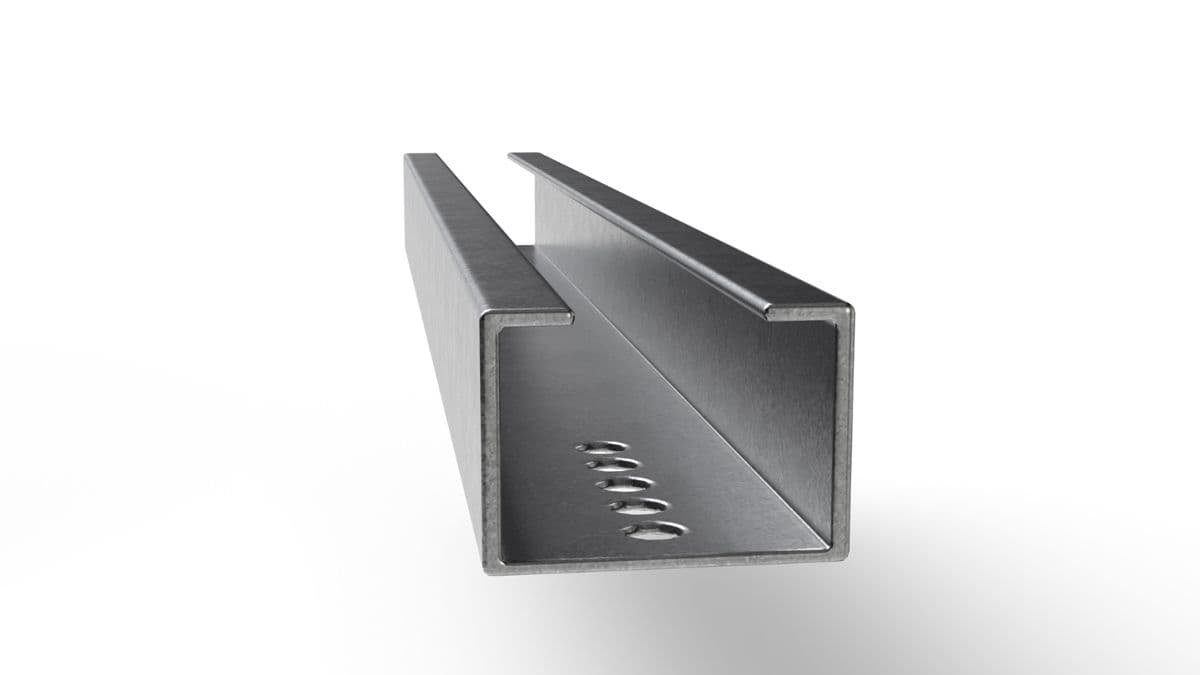
C-Pile
The primary driven post. Lips stiffen the flanges against buckling; the open face takes brackets anywhere along its length.
Learn More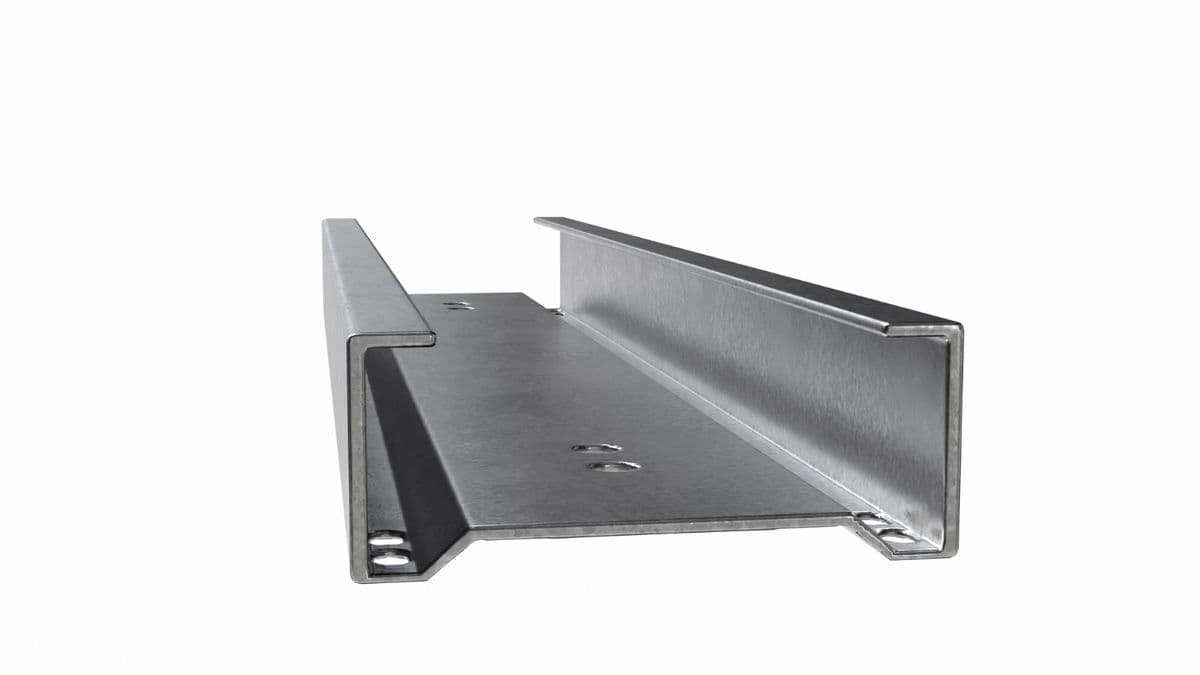
Sigma Pile
Stepped, rib-stiffened web — more moment at the same gauge, and grip for deeper embedment in soft ground.
Learn More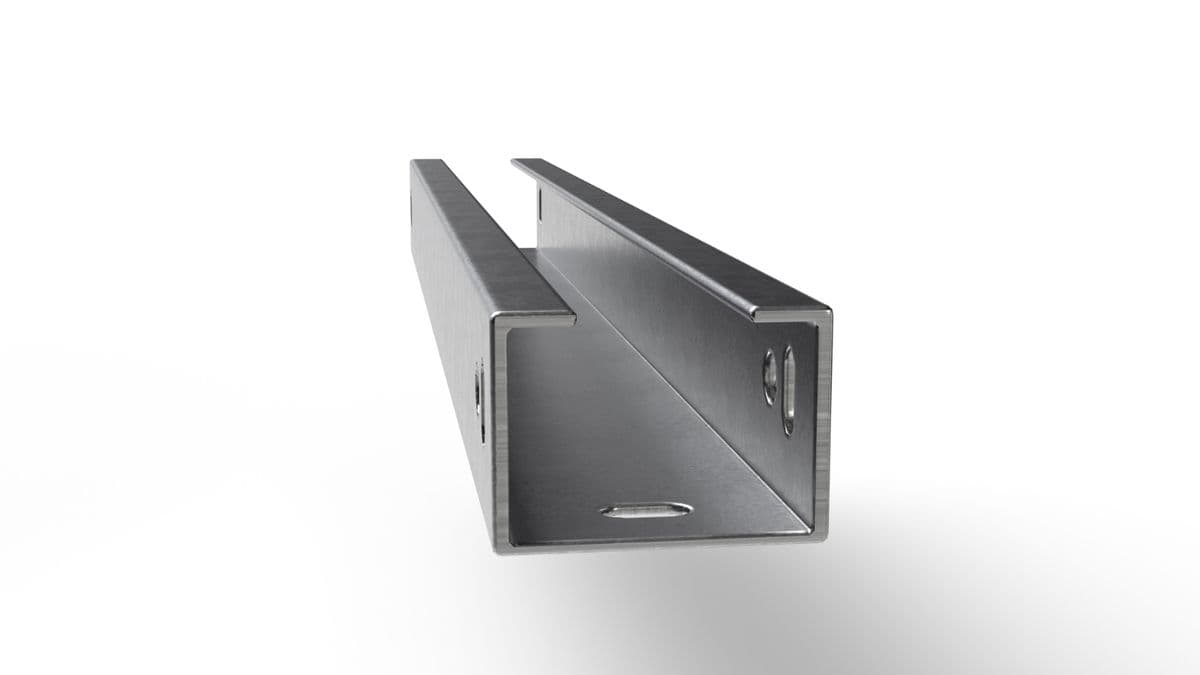
Purlins & Rails
C and Z purlins and omega rails that carry the modules — pre-punched, ZM-coated, to drawing.
Learn More