Fiber Laser Cutting
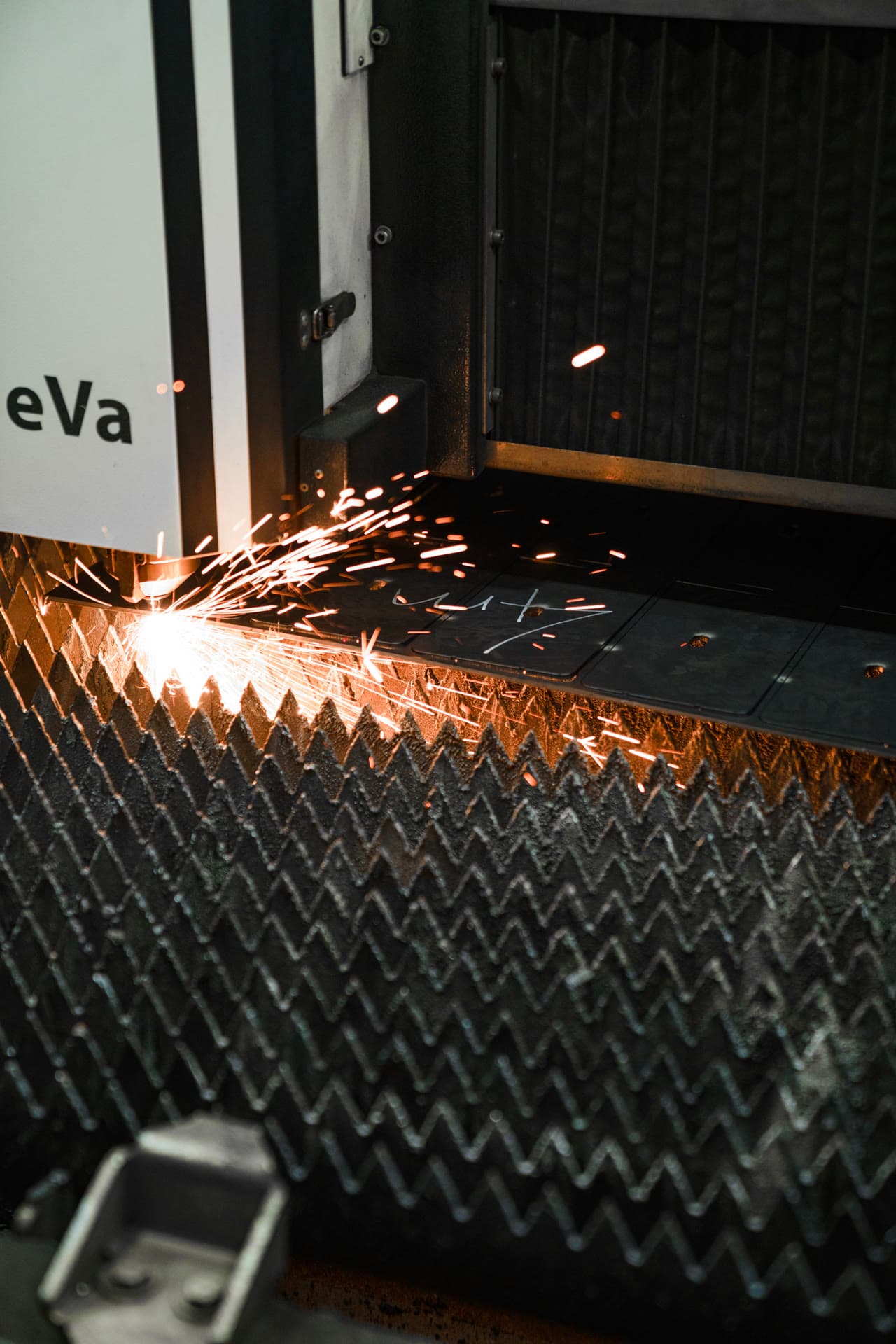
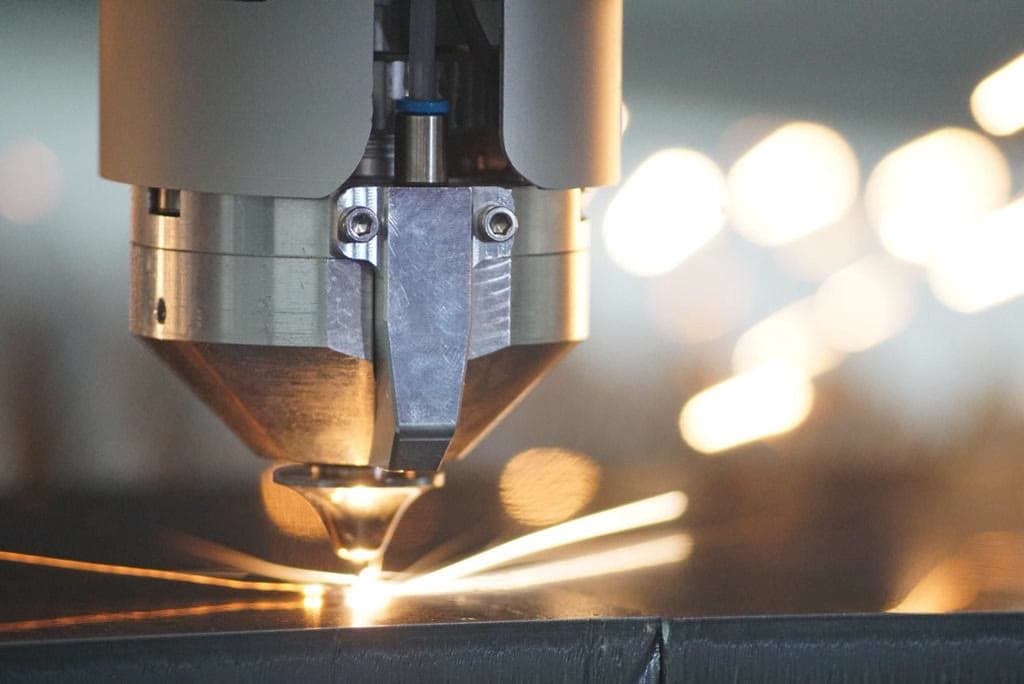
At our plant we provide subcontract sheet laser cutting and tube & profile laser cutting on a 20 kW fiber laser. Twenty kilowatts delivers laser-quality cuts in carbon steel up to 30 mm and high throughput in series production; on thick material and high quantities this translates directly into unit cost.
Nitrogen-based cutting of carbon steel needs far more laser power than oxygen cutting, which is why many plants limit it to thin and medium gauges and cut thicker plate with oxygen. On our 20 kW fiber laser we cut carbon steel up to 20 mm with nitrogen-based mixed-gas technology: a nitrogen-rich mix with a small share of oxygen. Oxidation of the cut edge is kept to a minimum, so cut faces are cleaner and corners, small holes and fine details come out sharper and truer to size. Because no heavy oxide layer forms on the edge, priming, painting, powder coating, coating and hot-dip galvanizing give far more consistent results on the cut edges. Thicker plate is cut with oxygen.
We cut black, cold-rolled, pickled, stainless 304/316, aluminium, galvanized, Zn-Al-Mg and Hardox, using parameters that preserve the coating on coated sheet. Our tube & profile laser unit completes holes, notches and end contours in box section and tube in a single operation. We take work at every scale, from a single prototype to series production, delivered to ±0.1 mm with a clean edge.
Bending, welding and assembly continue in the same plant after cutting: material is supplied from our own stock, cut on the laser, bent on the 1,000-ton press brake and delivered weld-ready. Production under one roof secures both lead time and tolerance. We organise shipping across Türkiye and abroad.
A DXF or DWG file is sufficient for a quote; we also work from PDF drawings and dimensioned sketches. Send it with material, thickness and quantity and we will come back with price and lead time promptly.
Capabilities
- Up to 20 kW fiber laser power
- Up to 30 mm cutting thickness on sheet
- Dedicated tube & profile laser cutting unit
- Clean edges with ±0.1 mm accuracy
- Fast transition from prototype to series
Materials Processed
Technical Specifications
| Laser power | 20 kW fiber (maximum) |
|---|---|
| Sheet thickness | Carbon steel up to 30 mm |
| Nitrogen mixed-gas cutting | Carbon steel up to 20 mm — minimal oxidation, edge suited to paint and galvanizing |
| Tube & profile | Dedicated tube & profile laser unit |
| Accuracy | ±0.1 mm |
| Materials | Black, cold-rolled, pickled, stainless 304/316, aluminium, galvanized, Zn-Al-Mg, Hardox |
| Drawing format | DXF, DWG, PDF, dimensioned sketch |
| Quantity | One-off prototype to series |
| After cutting | Press-brake bending, welding, assembly — same plant |
| Delivery | Across Türkiye and export |
Go deeper
- How Subcontract Laser Cutting Is Priced — and How to Get an Accurate QuoteIn subcontract laser cutting the price is built from machine time, material, thickness, cut length, pierce count, assist gas, quantity and secondary operations. We explain how each one moves the price, how to compare quotes properly and which design decisions lower cost.
- What Is Fiber Laser Cutting? Principle, Cut Quality and Design RulesThe physics of fiber laser cutting, oxygen versus nitrogen cutting, how laser compares with plasma and oxy-fuel, cut quality to EN ISO 9013, material-specific points, design rules for laser-cut parts, and tube laser cutting.
Frequently asked questions
Up to what thickness do you cut with nitrogen-based gas?
On our 20 kW fiber laser we cut carbon steel up to 20 mm with nitrogen-based mixed gas (nitrogen with a small share of oxygen); thicker plate is cut with oxygen. Stainless steel and aluminium are cut with nitrogen.
How does nitrogen mixed-gas cutting differ from oxygen cutting?
With mixed gas, oxidation of the edge is kept to a minimum, giving a cleaner face and sharper corners and hole details. Oxygen cutting leaves a distinct oxide layer that may need removing before painting or galvanizing.
Are mixed-gas cut parts suitable for painting and galvanizing?
Yes. Because no heavy oxide layer forms on the cut edge, primer, paint, powder coating, coatings and hot-dip galvanizing give far more consistent results on the cut edges.
Which files should I send for a quote?
DXF or DWG is best; a PDF drawing or dimensioned sketch also works. State material, thickness, quantity and whether the edge will be painted or galvanized.
Get a quote for your project
Send us your requirements and our technical team will prepare a price offer based on dimensions, quantity and delivery terms as soon as possible.