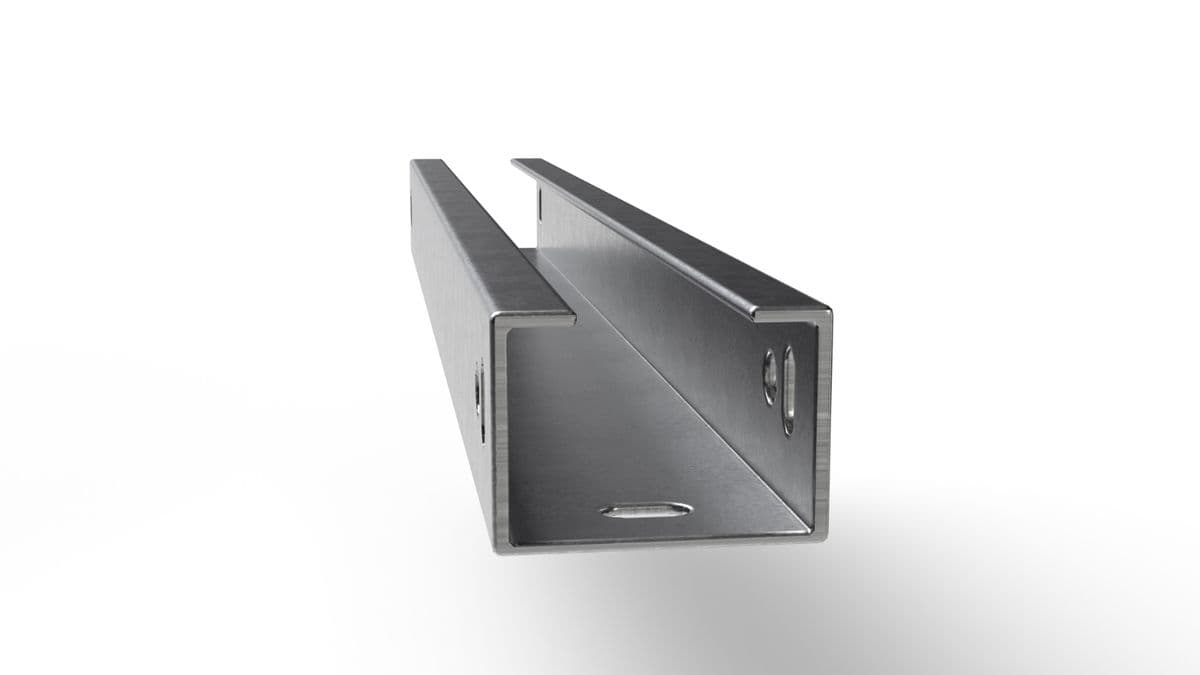
Z-Profiles and Z Purlins — Roll-Formed to Drawing
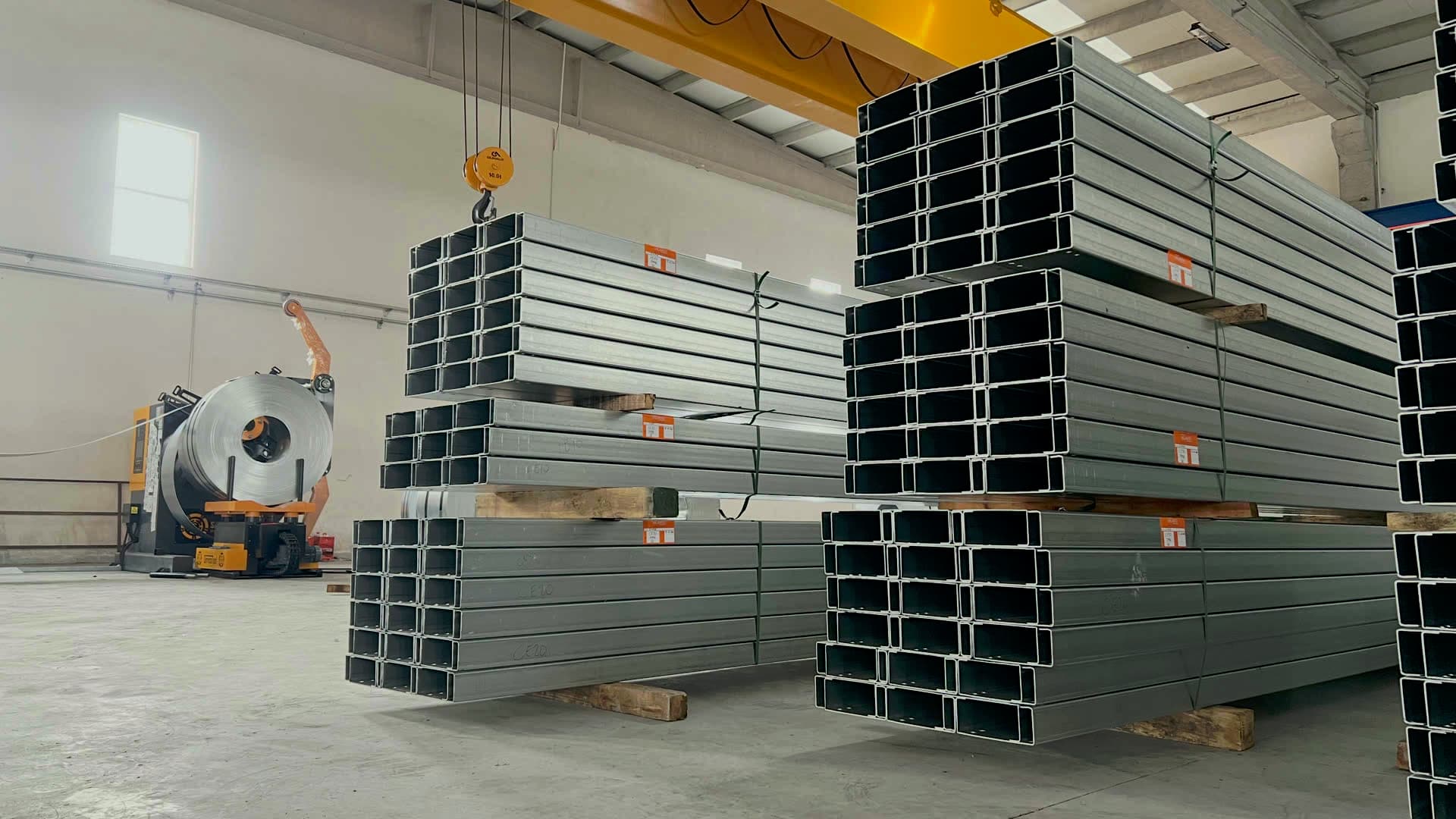
Yılmaz Sac Profil roll-forms lipped Z-profiles and Z purlins to the customer's drawing in 1–6 mm steel, on tooling and rolls it designs and makes in-house, with more than 2,500 tons a month of roll-forming capacity. Used as roof purlins and wall girts, the sections are formed from DX51D+Z galvanized, Zn-Al-Mg (ZM) coated, S350GD–S450GD structural-grade or black steel; lap and connection holes are punched and the sections cut to length in-line, and profiles ship across Türkiye and to Europe, the Middle East and North America.
Specifications
- Section
- Lipped Z (Z purlin), cold roll-formed
- Thickness
- 1.0 – 6.0 mm
- Material
- DX51D+Z galvanized · Zn-Al-Mg (ZM) · S350GD–S450GD · black steel
- Coating
- Pre-coated coil: Zn-Al-Mg ZM120–ZM430 · galvanized Z275–Z600
- In-line operations
- Punched holes and slots, cut-outs, cut to length
- Arrangement
- Lapped over supports (continuous) or single-span; lap holes punched in-line
- Length
- Cut to your length list
- Tooling and rolls
- Designed and made in-house
- Capacity
- Roll forming, 2,500+ tons a month
- Standards
- EN 10346 (coated steel) · EN 10025 (structural steel) · EN 10162 (tolerances)
- Quality
- ISO 9001 quality management system · fabrication to EN 1090
What is a Z-profile and where is it used?
A Z-profile is an open section cold-formed from steel coil on a roll-forming line: the strip passes through successive roll stations until it has a web, two flanges pointing in opposite directions and a lip (edge stiffener) at each flange tip. The section is point-symmetric, and because its flanges face opposite ways, two Z-sections of the same size can nest inside each other. That is why Z-profiles are used above all as roof purlins (Z purlins) and wall girts in steel buildings, lapped over the supports along long runs.
In solar plants the same section is the purlin that carries the modules; that use is covered on our Y Solar solar purlins and rails page. Roof and wall purlins in C, Z and sigma sections are covered together on our purlin manufacturer page.
| Application | Role of the Z-profile | Typical requirements |
|---|---|---|
| Roofs | Purlins carrying the roof cladding; lapped over supports along long runs | Galvanized or ZM, lap and connection holes punched in-line |
| Walls | Girts (side rails) carrying the wall cladding | Cut to the column spacing, connection holes |
| Solar mounting | Purlins carrying the modules | S350GD–S450GD, Zn-Al-Mg coating, clamp and connection holes |
| OEM and special uses | Load-bearing or connecting profile to drawing | Custom section and hole pattern on our own tooling |
Why are Z purlins lapped over the supports?
Because a Z-section's flanges face opposite ways, the end of one purlin slides inside the end of the next so that the two nest over a support (rafter, beam or column) and are bolted together. Across the lap the wall thickness is doubled, exactly where the purlin carries its largest moment, at the support. Instead of a string of separate spans, the run becomes a continuous beam over the supports.
In a continuous beam the mid-span moment and deflection are lower than in a single-span (simply supported) beam of the same span, so the same load can be carried by a lighter section or a thinner gauge. Lap length and the number and layout of bolts come from the project's structural calculation; we punch the lap holes in the same pass as the forming. In many purlin systems one flange is made slightly wider than the other so the sections nest easily; we roll the flange sizes on your drawing.
| Arrangement | At the support | At mid-span | Where it fits |
|---|---|---|---|
| Single-span | The purlin stops at the support or butts end to end; no moment is carried across | Moment and deflection are at their highest; the section is sized for them | Short runs and single-span structures |
| Lapped (continuous) | Two purlins nest and are bolted; the double thickness carries the support moment | Moment and deflection are lower than in the single-span layout | Long multi-span roof and wall runs |
Z purlin or C purlin: which should you choose?
An equal-flange Z and a C of the same h × b × c × t have the same developed width and the same weight per metre; the difference is in how the section behaves. A Z is point-symmetric, so its shear centre coincides with its centroid instead of lying outside the web as in a C, and it is less prone to twisting under load. On the other hand a Z's principal axes are inclined to the web: under vertical load the purlin also tends to deflect sideways. That movement is restrained by the roof or wall cladding and, where needed, by sag rods.
For long multi-span roof and wall runs the Z purlin is the usual choice, because it can be lapped. A C-profile is the simple choice for single spans, around door and window openings and for short members, and many buildings use both. Where more bending capacity is needed at the same gauge, the stepped web of a sigma profile is the next option.
| Property | Z-profile | C-profile |
|---|---|---|
| Symmetry | Point-symmetric, flanges facing opposite ways | Symmetric about the major axis, flanges on the same side |
| Shear centre | Coincides with the centroid | Outside the web; tends to twist |
| Principal axes | Inclined to the web; sideways deflection held by cladding and sag rods | Parallel to the web |
| Lapping over supports | Nests; lapped to act as a continuous beam | Does not nest; mostly used single-span |
| Weight (same h × b × c × t) | Same | Same |
| Typical use | Long multi-span roof purlins and wall girts | Single-span purlins, openings, racking, chassis, piles |
How do you choose Z-profile dimensions?
Web depth (h) sets the purlin's bending capacity about its major axis, flange width (b) the seat for the cladding and the lap as well as minor-axis stiffness, the lip (c) the flange's buckling resistance, and thickness (t) its load capacity. We roll Z-profiles from 1.0 mm to 6.0 mm thick, so 5 and 6 mm for heavily loaded purlins are within the range. Steel grade is a design lever too: with S420GD or S450GD instead of S350GD the same load is carried at a thinner gauge, lowering tonnage.
Z purlins are designed to EN 1993-1-3, where local and distortional buckling mean effective rather than gross section properties are used, and the inclined principal axes of the Z and the lateral restraint from the cladding enter the calculation. The project's structural calculation sets the final section, the lap length and the sag-rod layout. We support projects from the start with section optimisation and material and coating choice, so you do not pay for a purlin heavier than it needs to be.
Z-profile weight table (kg/m)
| Section (mm) | t = 1.5 | t = 2 | t = 2.5 | t = 3 | t = 4 | t = 5 | t = 6 |
|---|---|---|---|---|---|---|---|
| Z 100×50×15 | 2.59 | 3.40 | 4.19 | 4.95 | 6.40 | 7.74 | 8.97 |
| Z 120×50×20 | 2.95 | 3.88 | 4.78 | 5.66 | 7.34 | 8.91 | 10.39 |
| Z 150×60×20 | 3.53 | 4.66 | 5.76 | 6.84 | 8.91 | 10.88 | 12.74 |
| Z 175×65×20 | 3.95 | 5.21 | 6.45 | 7.66 | 10.01 | 12.25 | 14.39 |
| Z 200×70×20 | 4.36 | 5.76 | 7.13 | 8.48 | 11.11 | 13.62 | 16.04 |
| Z 240×80×25 | 5.18 | 6.86 | 8.51 | 10.13 | 13.30 | 16.37 | 19.33 |
Section properties: A, Ix, Wx
| Section × t (mm) | A (cm²) | Weight (kg/m) | Ix (cm⁴) | Wx (cm³) |
|---|---|---|---|---|
| Z 100×50×15×1.5 | 3.30 | 2.59 | 53.5 | 10.69 |
| Z 100×50×15×2 | 4.34 | 3.40 | 69.2 | 13.85 |
| Z 100×50×15×2.5 | 5.34 | 4.19 | 84.0 | 16.80 |
| Z 100×50×15×3 | 6.31 | 4.95 | 97.8 | 19.55 |
| Z 100×50×15×4 | 8.15 | 6.40 | 122.4 | 24.49 |
| Z 100×50×15×5 | 9.85 | 7.74 | 143.4 | 28.68 |
| Z 100×50×15×6 | 11.43 | 8.97 | 160.7 | 32.15 |
| Z 120×50×20×1.5 | 3.75 | 2.95 | 84.2 | 14.04 |
| Z 120×50×20×2 | 4.94 | 3.88 | 109.4 | 18.24 |
| Z 120×50×20×2.5 | 6.09 | 4.78 | 133.2 | 22.20 |
| Z 120×50×20×3 | 7.21 | 5.66 | 155.6 | 25.94 |
| Z 120×50×20×4 | 9.35 | 7.34 | 196.4 | 32.74 |
| Z 120×50×20×5 | 11.35 | 8.91 | 231.9 | 38.66 |
| Z 120×50×20×6 | 13.23 | 10.39 | 262.4 | 43.73 |
| Z 150×60×20×1.5 | 4.50 | 3.53 | 158.8 | 21.17 |
| Z 150×60×20×2 | 5.94 | 4.66 | 207.2 | 27.63 |
| Z 150×60×20×2.5 | 7.34 | 5.76 | 253.4 | 33.79 |
| Z 150×60×20×3 | 8.71 | 6.84 | 297.5 | 39.67 |
| Z 150×60×20×4 | 11.35 | 8.91 | 379.2 | 50.57 |
| Z 150×60×20×5 | 13.85 | 10.88 | 452.6 | 60.35 |
| Z 150×60×20×6 | 16.23 | 12.74 | 517.8 | 69.04 |
| Z 175×65×20×1.5 | 5.03 | 3.95 | 238.8 | 27.29 |
| Z 175×65×20×2 | 6.64 | 5.21 | 312.3 | 35.69 |
| Z 175×65×20×2.5 | 8.21 | 6.45 | 382.9 | 43.76 |
| Z 175×65×20×3 | 9.76 | 7.66 | 450.6 | 51.49 |
| Z 175×65×20×4 | 12.75 | 10.01 | 577.2 | 65.96 |
| Z 175×65×20×5 | 15.60 | 12.25 | 692.4 | 79.13 |
| Z 175×65×20×6 | 18.33 | 14.39 | 796.5 | 91.03 |
| Z 200×70×20×1.5 | 5.55 | 4.36 | 341.0 | 34.10 |
| Z 200×70×20×2 | 7.34 | 5.76 | 446.8 | 44.68 |
| Z 200×70×20×2.5 | 9.09 | 7.13 | 548.8 | 54.88 |
| Z 200×70×20×3 | 10.81 | 8.48 | 647.0 | 64.70 |
| Z 200×70×20×4 | 14.15 | 11.11 | 832.0 | 83.20 |
| Z 200×70×20×5 | 17.35 | 13.62 | 1,002.2 | 100.22 |
| Z 200×70×20×6 | 20.43 | 16.04 | 1,157.8 | 115.78 |
| Z 240×80×25×1.5 | 6.60 | 5.18 | 580.0 | 48.33 |
| Z 240×80×25×2 | 8.74 | 6.86 | 762.1 | 63.51 |
| Z 240×80×25×2.5 | 10.84 | 8.51 | 938.7 | 78.23 |
| Z 240×80×25×3 | 12.91 | 10.13 | 1,109.8 | 92.49 |
| Z 240×80×25×4 | 16.95 | 13.30 | 1,435.7 | 119.64 |
| Z 240×80×25×5 | 20.85 | 16.37 | 1,740.2 | 145.01 |
| Z 240×80×25×6 | 24.63 | 19.33 | 2,023.5 | 168.62 |
Theoretical example sizes, not a stock list. Values are calculated at 7.85 g/cm³ with an inner bend radius equal to the thickness, coating excluded. Ix and Wx are gross-section values about the horizontal centroidal axis (centre-line method); effective properties to EN 1993-1-3 are lower, depending on the stress level. Any size in the 1–6 mm thickness range is rolled to drawing; the project's structural calculation sets the final section.
How is Z-profile weight calculated?
The weight per metre of a cold-formed Z-profile comes from its centre-line developed width: developed width (mm) × thickness (mm) × 7.85 ÷ 1000 = kg/m. The bend radii shorten the developed width slightly; the table above accounts for that and shows equal-flange example sections. For a Z with unequal flanges, use the average of the two flange widths in the same calculation.
For example a 200×70×20 mm Z-profile in 2.5 mm weighs about 7.13 kg/m; with the same developed width, a C-profile of the same size also comes to about 7.13 kg/m. For your own size use our steel weight calculator or send us your drawing.
Galvanized or ZM Z purlins: is post-galvanizing needed?
No. We form Z-profiles from pre-coated coil — Zn-Al-Mg (ZM120–ZM430) or galvanized (Z275–Z600) — so the profile leaves the line coated and needs no post-galvanizing bath. Zn-Al-Mg self-heals at sheared and punched edges and lasts longer than galvanizing at the same coating mass, which matters on purlins full of lap, connection and sag-rod holes. See our Zn-Al-Mg vs galvanized guide.
Z-profiles that will be painted or welded into a fabrication are also rolled from black steel. Where the specification calls for hot-dip galvanizing, we supply that too.
How are Z-profiles formed and punched in-line?
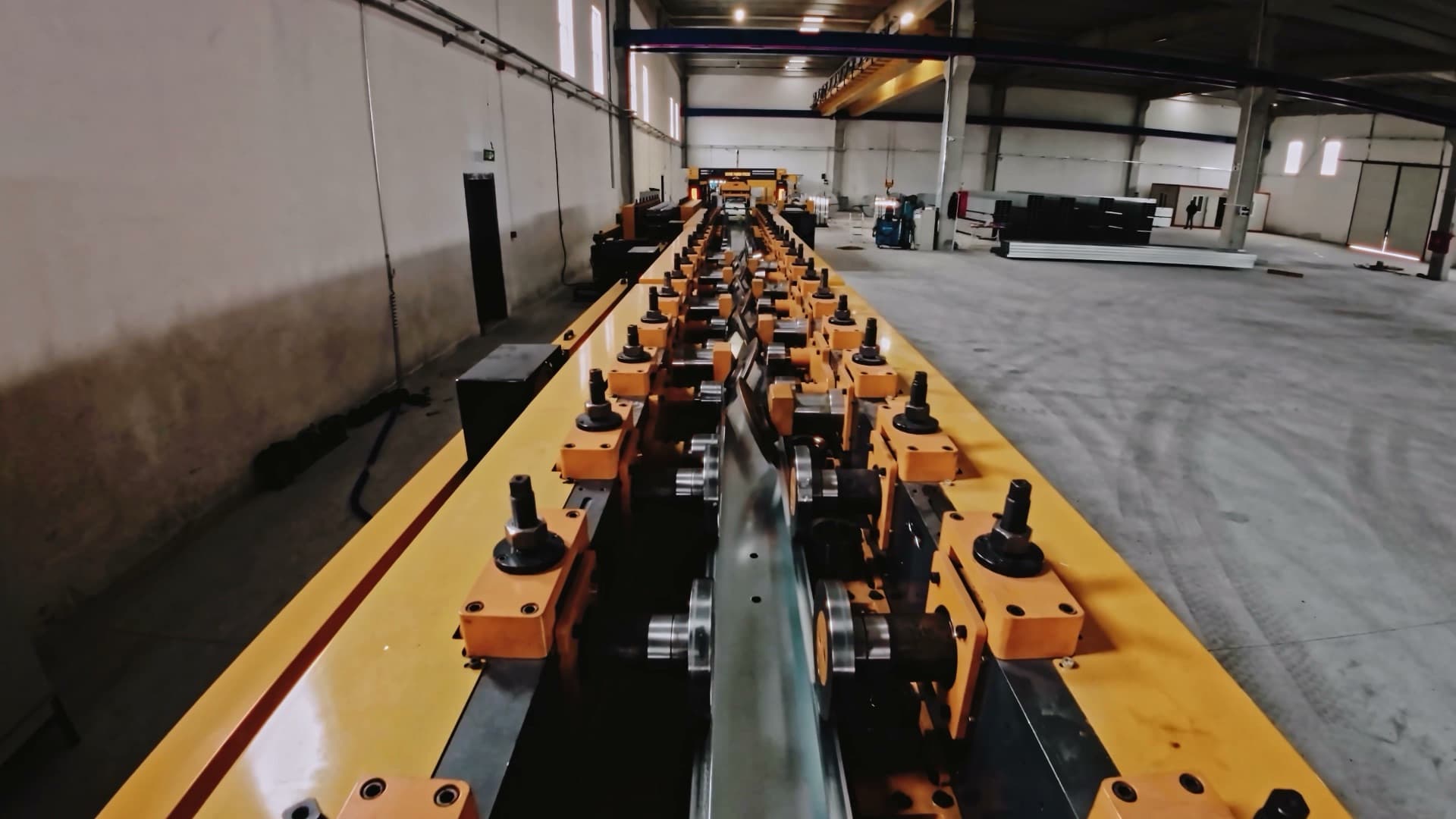
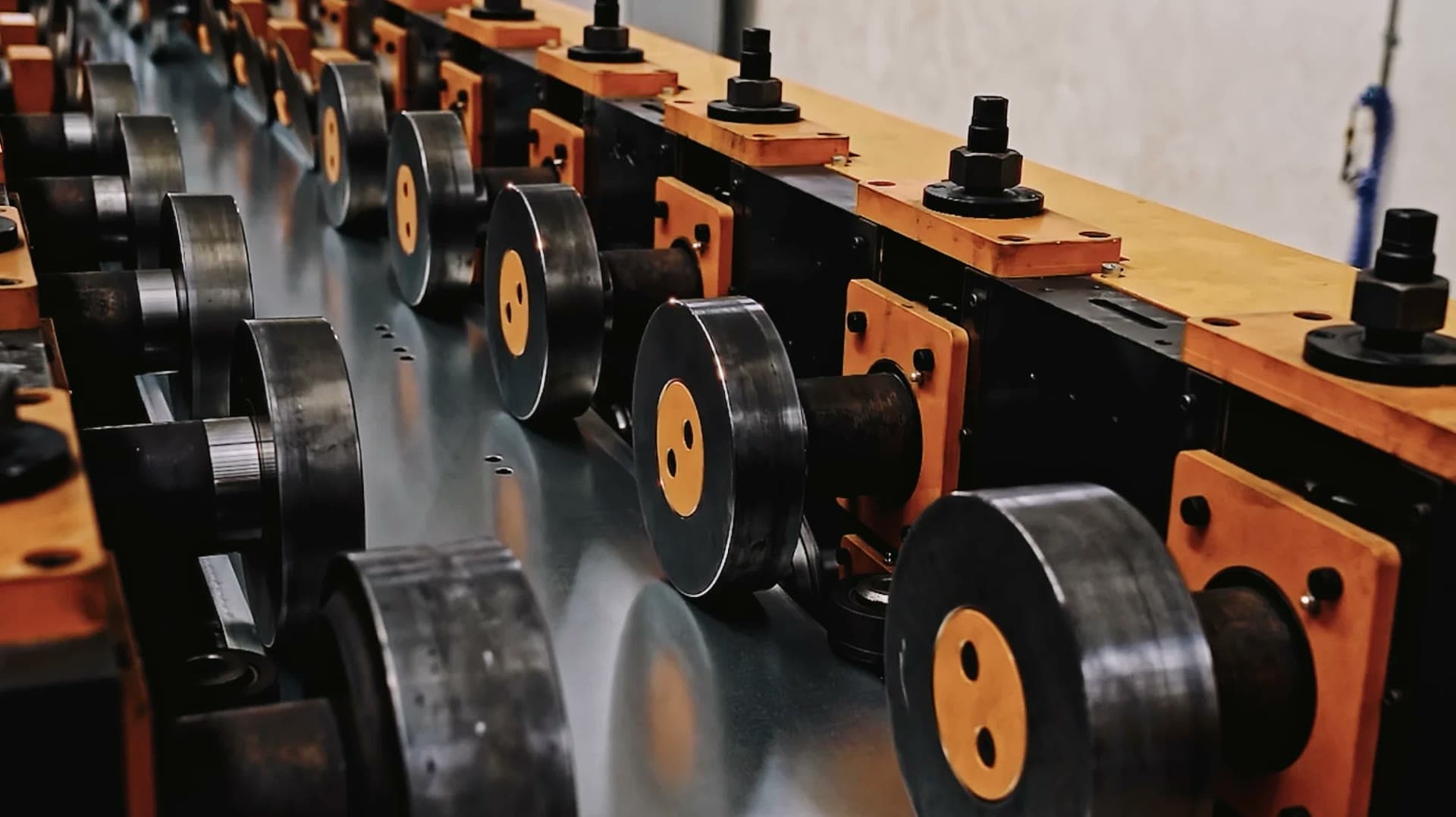
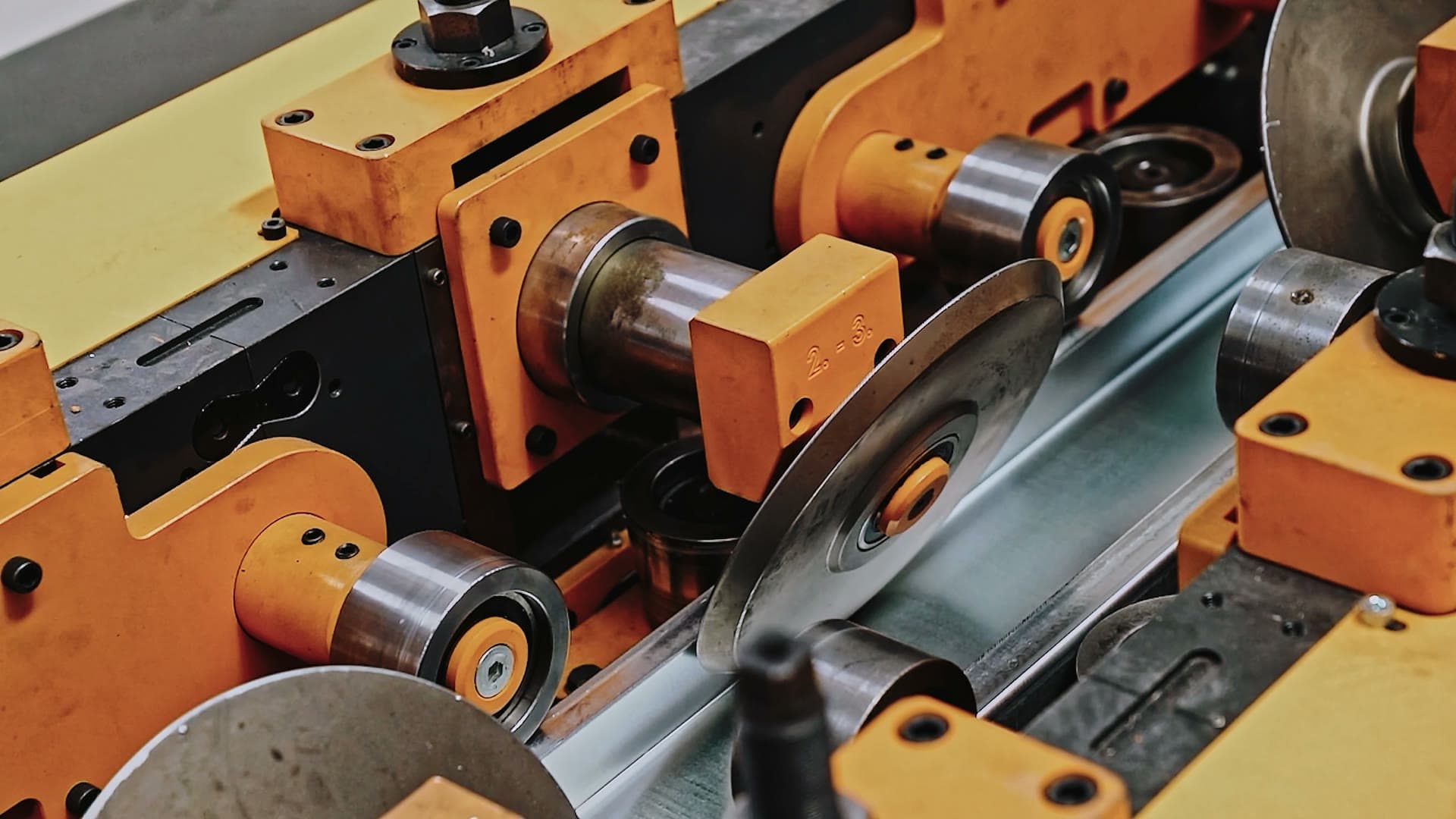
Decoiling and levelling, roll forming, in-line punching and flying cut-off to length all happen on one line. Lap and connection holes, sag-rod holes and slots are punched in the same pass as the forming, so hole positions are identical across thousands of parts and the holes of two lapped purlins line up on site.
Sections with no axis of symmetry, such as the Z, tend to twist and camber during forming; we compensate for that in the flower pattern (the forming sequence) and the straightening stands. Because we design and make the tooling and rolls in-house, a Z-section to your own drawing is taken from first article to series production by the same team. Design rules are covered in our guide to custom roll-formed profiles.
How are profiles delivered in Türkiye and abroad?
Profiles are packed by section and length, strapped with steel banding and labelled; we prepare the loading plan around the profile length. We ship across Türkiye and to Europe, the Middle East and North America by truck or container.
EN 10204 3.1 mill certificates and certificates of origin are provided on request; delivery terms (EXW, FOB or CIF) and the lead time are agreed at quotation. Production runs under an ISO 9001 quality management system.
What to send for a quote
- Section drawing (DXF, DWG or PDF) or h × b × c × t; both flange widths if they differ
- Arrangement: single-span or lapped; lap length and lap hole pattern
- Steel grade and coating: DX51D+Z, Zn-Al-Mg (ZM), S350GD–S450GD or black steel; coating class
- Length and quantity list (pieces per length) and, if known, annual volume in metres
- Hole and slot pattern: position, size and pitch
- Dimensions and tolerances critical to assembly (EN 10162 for the rest)
- Delivery location, terms (EXW, FOB, CIF) and documents needed (EN 10204 3.1, certificate of origin)
Upload your files through the quote form or email them to contact@yilmazsacprofil.com.
Frequently asked questions
Why are Z purlins lapped?
A Z-section's flanges face opposite ways, so two purlins nest over a support and are bolted together. The double thickness across the lap carries the support moment and the purlins act as a continuous beam along the run, so mid-span moment and deflection drop and the same load can be carried by a lighter section. The project's structural calculation sets the lap length.
Should I use Z or C purlins?
Z purlins suit long multi-span roof and wall runs because they can be lapped; C-profiles are common for single spans, around openings and for short members. At the same h × b × c × t the two weigh the same, so the span arrangement and connection details decide. The C-section is covered on our C-profile page.
What thicknesses do you roll Z-profiles in?
From 1.0 mm to 6.0 mm. The weight table on this page shows example thicknesses from 1.5 to 6 mm; any thickness in that range is rolled to drawing. Material is DX51D+Z galvanized, Zn-Al-Mg (ZM) coated, S350GD–S450GD structural-grade or black steel.
How do you calculate the weight of a Z-profile?
Weight per metre = centre-line developed width (mm) × thickness (mm) × 7.85 ÷ 1000. For example a 200×70×20 mm Z-profile in 2.5 mm weighs about 7.13 kg/m. An equal-flange Z weighs the same as a C of the same size; the table on this page gives theoretical values for example sizes.
Can Z-profiles be supplied pre-punched and cut to length?
Yes. Lap, connection and sag-rod holes and slots are punched on the roll-forming line in the same pass as the forming, and the flying cut-off cuts the profile to the lengths on your order list. Bundles are made up and labelled by section and length.
Is there a minimum order quantity?
There is no hard minimum on catalogue sections. A new section needs its own roll set, so it needs a worthwhile annual volume — tell us your annual metres and we will work out where the tooling pays for itself.
Do you export, and which documents do you provide?
Yes. We ship from Türkiye to Europe, the Middle East and North America by truck or container. EN 10204 3.1 mill certificates and certificates of origin are provided on request; delivery terms (EXW, FOB, CIF) are agreed at quotation.